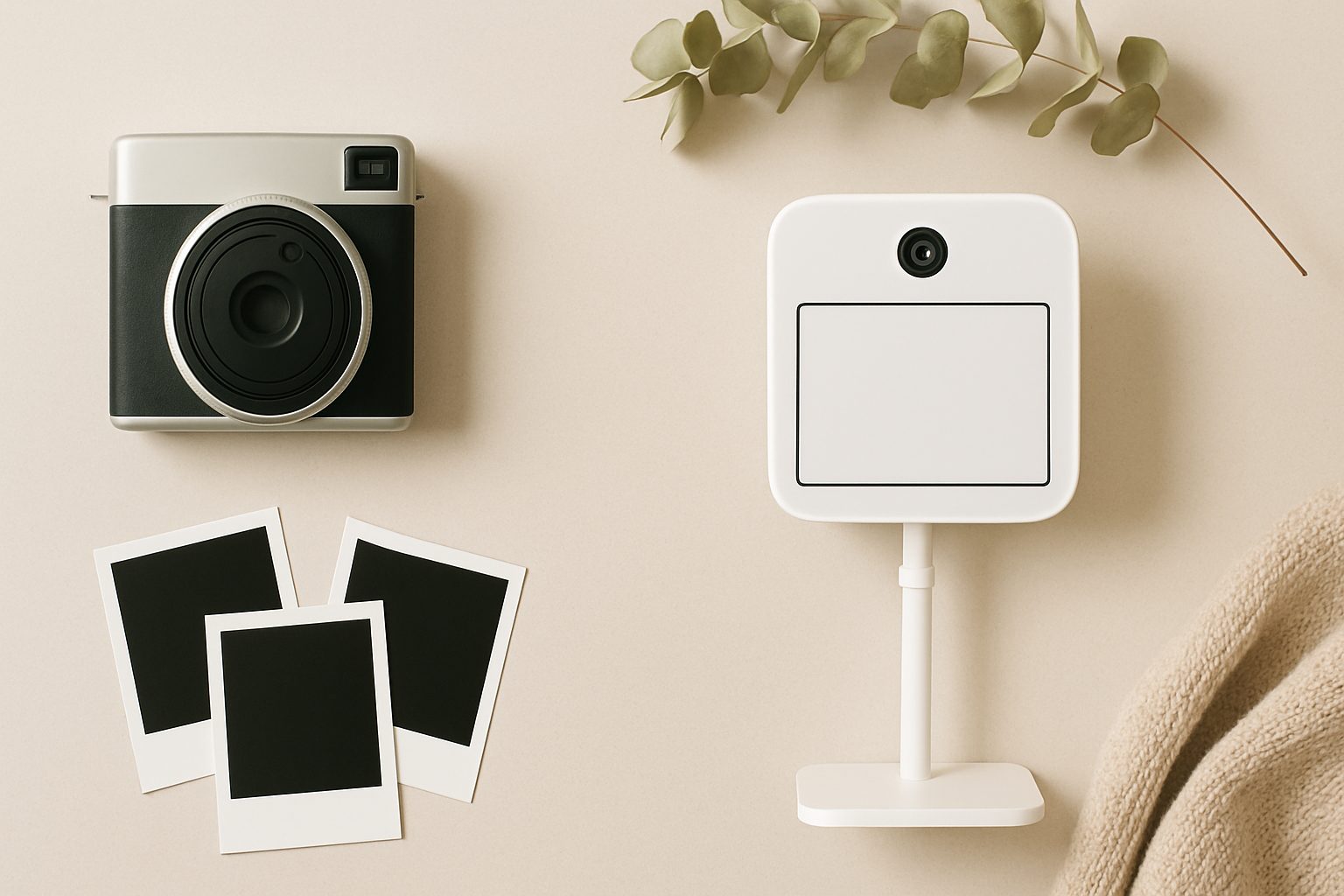
Best Home Photo Booths UK 2025: Top Picks for Every Budget
Home photo booths have moved beyond party novelties into genuinely useful equipment for content creators, small event businesses, and anyone wanting better selfies at gatherings. The UK market now offers everything from budget DIY setups to semi-professional kits, so knowing what actually works at each price point matters.
Budget Tier: Under £150
At this level, you're looking at selfie ring lights with phone mounts or basic webcam-style photo booth frames. A decent LED ring light (usually 10-12 inches) with an adjustable phone stand runs £30–£60 and genuinely improves phone photos thanks to balanced front lighting. The downside is obvious: it's just lighting. You're still holding your phone or rigging it with a cheap tripod, and you'll need a second person to operate the setup for anything beyond selfies.
Some sellers offer "photo booth kits" under £150 that bundle a backdrop stand with paper rolls, a ring light, and a basic props pack. These work fine for flat-lay product photography or casual party snaps, but the backdrop stands wobble easily and the paper damages after a few events. They're genuinely useful for testing whether you want to invest further, but don't expect durability.
What works here: Phone-based video and photos with ring lighting. Casual at-home use. Product photography on a budget.
What doesn't: Professional event look. Consistent framing. Hands-free operation.
Mid-Range: £150–£400
This is where selfie mirrors and iPad-based kits enter the game. A selfie mirror—essentially a digital mirror in a steel or aluminium frame that displays a live camera feed, applies beauty filters, and lets users tap to take photos—runs £250–£350. The appeal is real: they're fun, they encourage people to use the booth because they see themselves on screen, and they work for weddings, parties, and corporate events without needing external lighting or backdrops.
The tradeoffs: selfie mirrors need a power outlet or large battery pack, take up floor space, and require someone to manage the queue and email photos to users afterward. The photos themselves are front-facing only, so you don't get the fun booth aesthetic of a physical enclosure. Also, the cheaper models have slow touchscreens and occasionally crash mid-event.
Another option in this bracket is a quality portable booth enclosure—around £300–£400. These are lightweight metal-frame structures (usually hexagonal or cubic) with fabric walls and a curtain. You mount a phone, DSLR, or webcam inside, set up a backdrop, and users step in to take photos. The quality and stability vary wildly depending on the brand; reviews matter here because some feel flimsy after even one weekend of use.
What works here: Selfie mirrors for modern, interactive events. Portable booths for intimate gatherings. Better photo quality than budget setups.
What doesn't: Selfie mirrors aren't a business-on-a-budget tool if you're shooting 100+ photos per event. Portable booths still look DIY, not polished.
Premium Tier: £400–£1,000
At this price, you're buying either a proper selfie mirror from a established brand with better hardware and software, or a semi-professional portable booth setup with better framing and lighting.
Quality selfie mirrors (£400–£700) have faster processors, better screens, more reliable printing options if you want to include a thermal printer, and longer battery life. Some connect to cloud storage so you can remotely manage the event and guests receive photos via email or QR code.
For portable booths, the premium products include a frame, enclosure, backdrop system, and often an iPad with pre-loaded software—all designed to work together. These typically give you a more polished look because the enclosure is larger and sturdier, the lighting is better integrated, and the software handles photo management automatically. Expect setup and breakdown to take 20–30 minutes rather than 5, but the results look considerably more professional.
You'll also find some dedicated iPad-based booth systems in this range. These are tablets pre-loaded with proprietary photo booth software, mounted on a professional stand with an external ring light or LED panel. They're more compact than full enclosures, suit corporate events and weddings, and the software usually includes customisable overlays, branded props, and automatic emailing.
What works here: Professional-looking results. Reliability at larger events. Better software for managing and sharing photos.
What doesn't: Still not a full commercial photo booth (which costs £2,000+). Requires power management and basic technical competence.
Which Type for What?
Choose a selfie mirror if you want an interactive, guest-centric experience and guests want instant selfies with filters. Best for parties, celebrations, and events where the booth itself is the entertainment.
Choose a portable booth enclosure if you want a traditional photo booth look—guests step in, pose with props, and get a keepsake. Works well for weddings, corporate team-building, and events where you want posed photos.
Choose an iPad-based kit if you're doing this semi-professionally and need customisation (branded overlays, your company logo), good software for batch processing, and something that's easy to operate for someone with minimal tech skills.
The Reality Check
Home photo booths genuinely work for small events and content creation, and the quality at every price tier has improved considerably. But they require realistic expectations: someone needs to manage the booth, your lighting setup affects photo quality significantly, and post-event photo management takes time. The under-£150 options are fine for testing; anything above £300 starts to feel like a proper investment in equipment that will survive multiple uses.
More options
- Portable Instant Photo Booth Printer (e.g. Canon Selphy CP1500 / DNP DS-RX1HS) (Amazon UK)
- Selfie Mirror Magic Mirror Photo Booth Machine (Amazon UK)
- Ring Light with Stand for Photo Booth (18-inch, heavy-duty) (Amazon UK)
- iPad Kiosk Stand Photo Booth Enclosure (Amazon UK)
- Photo Booth Props Kit & Backdrop Bundle (Amazon UK)